


POWER GENERATION
As an important form of clean energy utilization, natural gas power generation has become increasingly prominent in its comprehensive advantages amidst the global energy transition and the "dual carbon" goals. The following is a systematic analysis of its core advantages:
Environmental advantage:
The most prominent low-carbon fossil energy source
Significant reduction in carbon emissions
The core advantage of natural gas lies in its chemical composition. Its main component is methane (CH₄), which has a much lower carbon-to-hydrogen ratio than coal. This means that for the same amount of energy produced, burning natural gas releases significantly less carbon dioxide. Compared to coal, natural gas can reduce carbon dioxide emissions by approximately 40%-50%. For countries like Canada, which impose high carbon taxes (such as Alberta's TIER system), using natural gas for power generation or heating can directly and significantly lower corporate compliance costs, making it an inevitable choice in the transition from high-carbon to low-carbon energy sources.

Extremely low emissions of pollutants
Compared to coal and oil, natural gas is a "clean" fuel. It produces virtually no sulfur dioxide (SO₂) during combustion, causing minimal harm that leads to acid rain. Simultaneously, the nitrogen oxides (NOx) and particulate matter (PM) emitted from natural gas combustion are also far lower than those from coal. For a project located in Alberta, this means it can better meet the province's stringent air quality standards and environmental protection requirements, offering a significant advantage in protecting the community environment and the health of working personnel.
Supporting the development of renewable energy
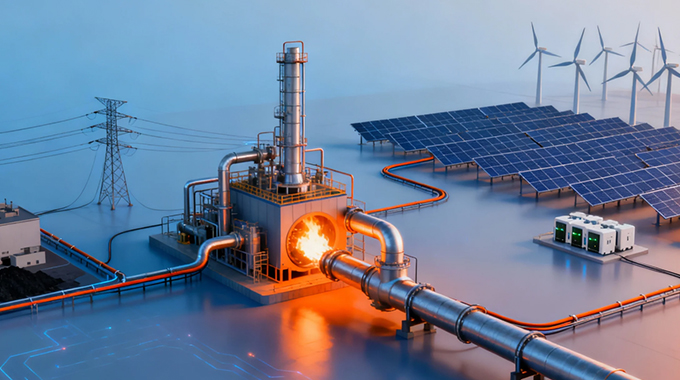
Natural gas power generation possesses unique flexibility, making it the "ideal partner" for intermittent renewable energy sources like wind and solar. When weather conditions are poor, leading to insufficient wind or solar power, natural gas generator sets can start up quickly to bridge the power gap and ensure grid stability. Unlike the "inflexibility" of coal, natural gas can rapidly respond to load changes, thereby creating the conditions for the large-scale integration of renewable energy into the grid. It is a key support for building a clean, stable, and efficient energy system for the future.
Economic and efficiency advantages
01
High power generation efficiency
The power generation efficiency of modern large-scale natural gas combined cycle power generation technology has exceeded 60%, far surpassing the approximately 45% efficiency of supercritical coal-fired units. The efficiency of distributed gas internal combustion engines or gas turbines is also generally between 40% and 85% (in combined heat and power generation mode).
02
High comprehensive energy utilization rate
Natural gas power generation can fully utilize the high-temperature flue gas and residual heat of cylinder jacket water after power generation for heating, cooling, or industrial steam. The comprehensive energy utilization rate of the system can reach 80%-90%, achieving cascade and efficient utilization of energy.
03
Advantages in initial investment and construction period
Gas-fired power plants do not require large coal yards, desulfurization, denitrification, and dust removal facilities. They have lower investment per kilowatt, and are highly modularized, with a construction period that is more than 50% shorter than that of coal-fired power plants of the same size, leading to faster capital recovery.
04
Relatively low operation and maintenance costs
High automation level requires fewer operating personnel. During the equipment's lifespan, under the premise of stable gas prices, the fuel cost per kilowatt-hour is usually between that of coal-fired power and renewable energy.
Operational flexibility and reliability advantages
Excellent peak shaving capability
Significant reduction in carbon emissions
The core advantage of natural gas lies in its chemical composition. Its main component is methane (CH₄), which has a much lower carbon-to-hydrogen ratio than coal. This means that for the same amount of energy produced, burning natural gas releases significantly less carbon dioxide. Compared to coal, natural gas can reduce carbon dioxide emissions by approximately 40%-50%. For countries like Canada, which impose high carbon taxes (such as Alberta's TIER system), using natural gas for power generation or heating can directly and significantly lower corporate compliance costs, making it an inevitable choice in the transition from high-carbon to low-carbon energy sources.

Flexible site selection, close to load centers
 Extremely low emissions of pollutants
Compared to coal and oil, natural gas is a "clean" fuel. It produces virtually no sulfur dioxide (SO₂) during combustion, causing minimal harm that leads to acid rain. Simultaneously, the nitrogen oxides (NOx) and particulate matter (PM) emitted from natural gas combustion are also far lower than those from coal. For a project located in Alberta, this means it can better meet the province's stringent air quality standards and environmental protection requirements, offering a significant advantage in protecting the community environment and the health of working personnel.


High reliability and automation
Supporting the development of renewable energy
Natural gas power generation possesses unique flexibility, making it the "ideal partner" for intermittent renewable energy sources like wind and solar. When weather conditions are poor, leading to insufficient wind or solar power, natural gas generator sets can start up quickly to bridge the power gap and ensure grid stability. Unlike the "inflexibility" of coal, natural gas can rapidly respond to load changes, thereby creating the conditions for the large-scale integration of renewable energy into the grid. It is a key support for building a clean, stable, and efficient energy system for the future.

Resources and strategic advantages
Rich resource base
Global natural gas reserves are abundant, with diversified supply sources (pipeline gas, LNG). Canada possesses abundant natural gas resources.
The "bridging" role of energy transformation
Before the renewable energy system is fully mature and large-scale energy storage is achieved, natural gas power generation serves as the most practical and feasible "transitional energy" and "backbone energy" to replace coal power and achieve deep decarbonization of the power system.
Summary

The core advantage of natural gas power generation lies in its comprehensive characteristics of "cleanliness, efficiency, and flexibility".


It is not only the most potent tool for improving air quality and reducing carbon emissions at present, but also an indispensable stabilizer and regulator for constructing a new power system and supporting the development of renewable energy. Whether used in large base-load power stations, distributed energy, or combined heat and power projects, natural gas power generation can achieve an excellent balance between energy security, economic benefits, and environmental protection, making it an irreplaceable key player in the global energy transformation process over the next two to three decades.


For users, especially in scenarios where gas supply is guaranteed, electricity pricing mechanisms are well-established, there is a demand for heat/cold, or high reliability of power supply is required, natural gas power generation is a strategically attractive choice.