MINING
Bitcoin mining is the core mechanism for the operation of the Bitcoin network. It serves as both a method for issuing new Bitcoin and a crucial process for ensuring network security and confirming transactions. Below is a comprehensive introduction to Bitcoin mining:
The core purpose of mini
Issuing new Bitcoin
Miners obtain block rewards (currently 3.125 BTC, halving every 4 years) by competing for the right to record transactions, which is the initial distribution method of Bitcoin.
Maintaining network security
Preventing double spending and tampering with transaction history through the Proof of Work (PoW) mechanism.
Confirming transactions
Miners package pending transactions into blocks and write them into the blockchain, achieving final confirmation of the transactions.
Proof of Work (PoW) mech

-Miners need to solve a complex mathematical puzzle (calculating hash values) to find a random number (Nonce) that meets the network difficulty target.

-Hash calculation is unpredictable and can only be completed through continuous trial and error (brute force calculation), consuming a significant amount of computing power.

-Difficulty adjustment: The computational difficulty is adjusted every 2016 blocks (approximately every two weeks) to ensure that the average block generation time remains around 10 minutes.

Steps of mining process
01
Collecting transactions
Miners select transactions to be processed from the memory pool (Mempool), giving priority to packing transactions with high transaction fees.
02
Constructing a block
Combine the transaction with the hash value of the previous block, timestamp, and other information to form the block header.*see font size
03
Calculate hash
Continuously change the Nonce and calculate the SHA-256 hash value of the block header until the difficulty requirement is met (the hash value is less than the target value).
04
Broadcasting block
The first miner to find the correct Nonce will broadcast the new block to the entire network, and other nodes will synchronize it to their local ledgers after verification.
05
Earning rewards
Miners who successfully generate a block receive a block reward (new Bitcoin) and the transaction fees from the transactions within the block.
Evolution of mining hard
CPU mining (2009)
In the early days, mining could be done using ordinary computer CPUs.
GPU mining (2010-2013):
Graphics cards became more powerful in parallel computing, significantly enhancing efficiency.
FPGA/ASIC mining (2013 to present)
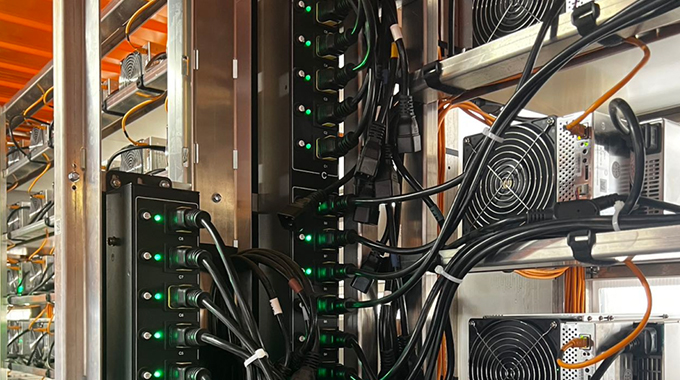
Application-specific integrated circuits (ASICs) have become mainstream, with a high degree of centralization in computing power, making it difficult for individual miners to compete.
Mining pool and hashrate
01
Mining pool
Individual miners connect their computing power to a mining pool for joint mining, and share the profits according to their contribution ratio, reducing income fluctuations.
02
Hash rate distribution
Currently, global hash rate is concentrated in a few large mining pools (such as Foundry USA, AntPool, etc.), sparking debates on decentralization.
Energy consumption and disputes
The annual electricity consumption for Bitcoin mining is approximately 121-160 TWh (data from 2024),
which is close to the total electricity consumption of Argentina.
Balance Focus
Minimizing footprints and environmental impacts are key considerations and objectives while balancing the emerging need for PoW and digital financial security.
Green mining trend
Mining farms are shifting towards renewable energy sources (hydropower, wind power, and utilization of excess electricity), or participating in grid peak shaving.
The economics and risks of mining
01
Cost factors
Electricity cost (the highest proportion), hardware investment, maintenance expenses, mining pool fees, etc.
02
Profit fluctuation
Due to factors such as Bitcoin price, mining difficulty, and electricity prices, profits are unstable.
03
Regulations
Some countries and jurisdictions have developed robust regulations and policies while others are in the early stages of developing frameworks.

Future Trends
Cost factors
Electricity cost (the highest proportion), hardware investment, maintenance expenses, mining pool fees, etc.
Profit fluctuation
Due to factors such as Bitcoin price, mining difficulty, and electricity prices, profits are unstable.
Regulations
Some countries and jurisdictions have developed robust regulations and policies while others are in the early stages of developing frameworks.

Summary

Bitcoin mining is a concrete practice of the Proof-of-Work (PoW) consensus mechanism, which drives global computing power to maintain network security and decentralization through economic incentives. Despite  the business challenge of securing the appropriate mining project, mining remains an indispensable cornerstone of the Bitcoin ecosystem, and its evolution will profoundly affect the future development of Bitcoin.